
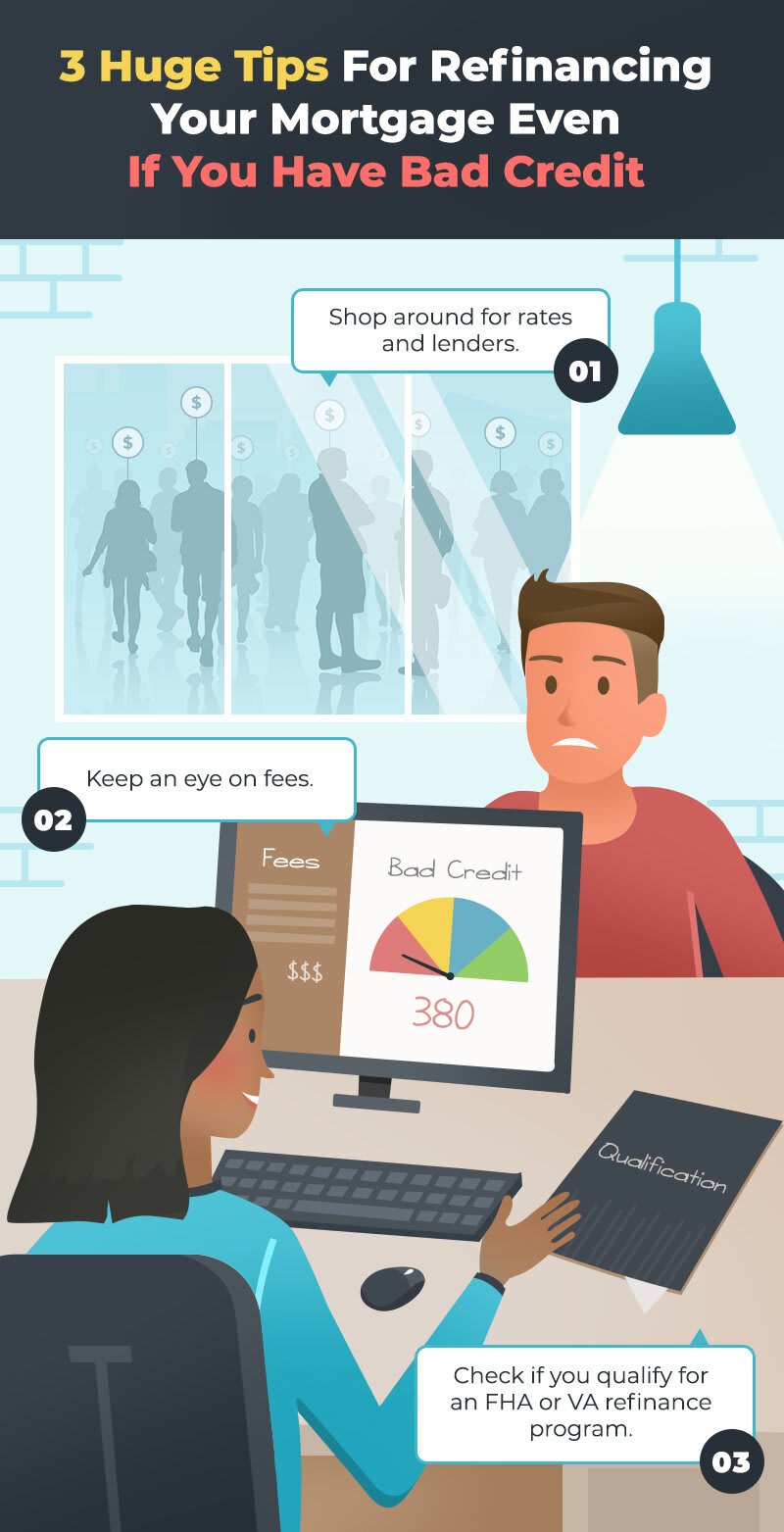
1. Shop Around for Rates and Lenders.

However, experts say it's also worth it to shop around for another lender who may be willing to give you a better rate, even if you have less-than-stellar credit. Check and compare for the best interest rates among real mortgage brokers, online mortgage brokers, and even institutions. If you can’t find the rates of a specific lender on comparison websites, try reaching out to the lender or institution directly to see for yourself if they actually have reasonable rates.
2. Keep an Eye on Fees.

Just as you did when you were getting your original mortgage, you'll need to pay closing fees when you refinance, which could amount to hundreds or thousands of dollars. This is why it’s imperative that you also ask about any fees—origination, appraisal fees, etc., so you’ll know how much you can really save. It’s possible that you may have found a lower rate with another lender or mortgage company, only to discover that their fees were higher.
Don’t be shy about asking for an itemized list of fees from each potential lender so you can find the one with a lower rate and more reasonable charges.
3. Check if You Qualify for An Fha or Va Refinance Program.
- FHA Streamline Refinance Program

- FHA rate-and-term refinance
- VA streamline refinance
If you have an existing VA mortgage, you can refinance by taking advantage of the VA Interest Rate Reduction Refinance Loan (IRRRL) to be able to lower your monthly payments. With the IRRRL, there’s no need for you to worry about your credit score and it typically does not require an appraisal, although the lender might. This is why it is also known as a VA streamline refinance because the process is simplified.