Where North Oak Knoll Avenue meets East Colorado Boulevard, the traffic signal sits on ground that once held 11 bungalows. Each one had its own garden. A driveway ran through the middle, and the entrance was a gateway of Arroyo stone and brick. This was St. Francis Court, designed by Sylvanus Marston and built in 1909. The City of Pasadena calls it the first bungalow court in a city generally credited as the birthplace of the form.
The court is gone because the street went through it. St. Francis Court was taken apart and partly moved so that Oak Knoll could be extended north to Union Street. Its original layout was lost. Five of the original bungalows survive, grouped on individual lots at the corner of South Catalina Avenue and Cornell Road.
The court Oak Knoll Avenue replaced
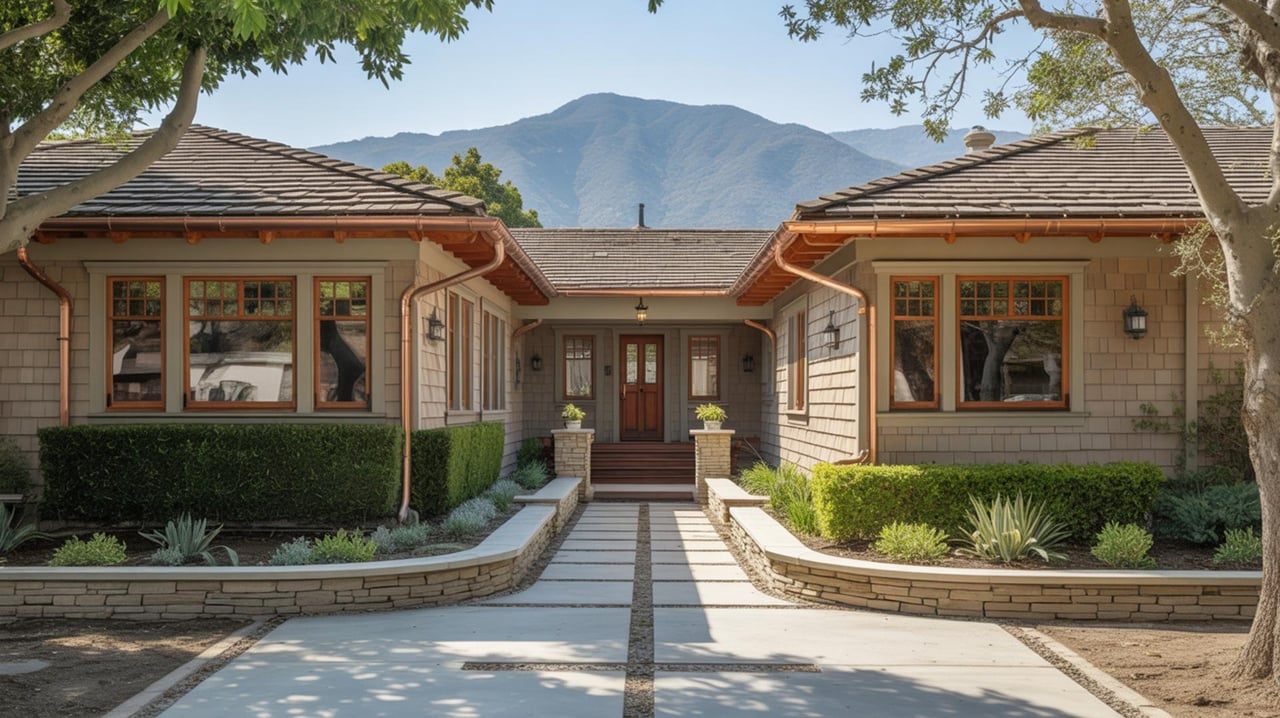
According to the City's history, St. Francis Court's bungalows had one to three bedrooms, modern conveniences for the time, and the quality of detail typical of the Arts and Crafts period. Pasadena then built bungalow courts from 1909 through 1942. Over those years courts changed from seasonal housing for visitors into permanent homes, and they were built in many architectural styles.
The same City page cites architectural historian Robert Winter's book American Bungalow Style, which records Charles Sumner Greene of Greene & Greene calling the bungalow court "a good example of what not to do." In Greene's view, courts had "no other reason for being than that of making money for the investor." More than a century later, Pasadena had counted over a hundred of them. That makes Greene's complaint one of the less accurate predictions in local architecture.
Five cottages on Catalina, and the courts around them
A walk from the old St. Francis site to its five survivors passes some of the best courts on the City's own Bungalow Courts Driving Tour. That tour lists 17 courts across the city, and several are close together east of Lake Avenue.
Harnetiaux Court, at 48 North Catalina Avenue, is a 1922 Colonial Revival court designed by Joseph Harnetiaux and listed in the National Register of Historic Places. Across the street is the 1905 Samuel P. Sanborn house, designed by Charles and Henry Greene and now used as offices and studios. From one spot you can see a court on one side of the street and a house by one of its harshest critics on the other.
Bonnie Court, at 138 South Bonnie Avenue, has Colonial Revival bungalows built by J.L. Gilkinson in 1924. Its site was updated in 2005, and the City lists the court as eligible for the National Register.
Haskett Court, at 834 East California Boulevard, is the stop with the most surprising history. Charles Ruhe designed its Tudor Revival bungalows in 1926. They spent many years as retail stores, and in 2009 they became housing again. Heritage Housing Partners rehabilitated the six cottages in their traditional court layout as one-bedroom, one-bath homes for low- and moderate-income buyers. Each cottage has a private patio, and the court is within walking distance of the shops and restaurants on South Lake Avenue.
The tour also recommends a detour one block south of East California Boulevard and South El Molino Avenue. Oak Knoll Gardens, built from 1921 to 1923, is technically not a bungalow court. Its two small blocks of gardens and small houses, many in the English Cottage Revival style, have much the same character.
Here is a loop that covers this part of town:
- Start at East Colorado Boulevard and North Oak Knoll Avenue, the site of St. Francis Court.
- Go to Harnetiaux Court at 48 North Catalina Avenue, across from the Sanborn house.
- Continue to Bonnie Court at 138 South Bonnie Avenue.
- Go south to Haskett Court at 834 East California Boulevard, then take the Oak Knoll Gardens detour near South El Molino.
- Finish at South Catalina Avenue and Cornell Road, where the five St. Francis bungalows stand.
The oldest court in place, and the one that moved
St. Francis Court lost its layout, so two other courts compete for the title of oldest. The City names Bowen Court, at 539 East Villa Street, as Pasadena's oldest bungalow court still in its original configuration and location. It was built in 1911 and designed by Arthur and Alfred Heineman. It is also the city's largest court, with 23 buildings of single units and duplexes on a site of one and a half acres. A rustic building once called the "tea room" had a thatched roof, which has since been replaced, and some of its log railings remain. The City describes the court's mature landscaping as a wooded oasis in the middle of a mixed neighborhood.
The Heinemans took the idea further. In 1925 they turned the bungalow court into the first "mo-tel," the Milestone Mo-tel in San Luis Obispo. Anyone who has pulled into a roadside motel has seen a direct descendant of a Villa Street court.
Gartz Court, now at 745 North Pasadena Avenue, is one year older than Bowen Court. Myron Hunt and Elmer Grey designed it in 1910 on a site two miles from where it stands today. LAist reported in March 2024 that a construction company bought the court in the early 1980s and planned to replace it with an office expansion. In 1982, the City and Pasadena Heritage began an effort to save it. The court was listed on the National Register the next year, and in 1984 the bungalows were moved by truck in the middle of the night to Pasadena Avenue. A City plaque there now notes the court's historic status.
So the story of Pasadena's three oldest courts is mostly a story about moving them. Two of the three were relocated, and only Bowen Court still stands where it was built.
South Marengo, where the courts stand side by side
The most courts in one place are not near Oak Knoll at all. The City identifies South Marengo Avenue between East California Boulevard and Glenarm Street as the city's largest concentration of bungalow courts. Nine courts stand there, at 618-630, 642-654, 645, 699-705, 744-756, 801-823 and 877-899 South Marengo, at 982-990 South Marengo and 221-241 Ohio Street, and at 1010 South Marengo and 230-240 Ohio Street.
You can roughly date these courts by their style. According to the City, early courts were Craftsman. Courts from the 1920s and early 1930s were mostly period revivals such as Spanish Colonial, Mission, Colonial, Tudor and English Cottage. Courts from the late 1930s and early 1940s were usually Minimal Traditional. One court, at 754 South Marengo Avenue, is Art Deco. At the south end of the stretch, Marengo Gardens at 990 South Marengo and 221 Ohio Street has 1913 Craftsman bungalows that face both streets, with a central courtyard that opens onto Ohio. It is listed in the National Register.
Two Euclid Avenue courts a few blocks away continue the period-revival styles. Euclid Court, at 545 South Euclid, has Tudor Revival bungalows built by the Postle Company in 1922. Shafer Court, at 432 South Euclid, has English Cottage Revival bungalows built by J.H. Baker in 1921. Closer to downtown, Colonial Court at 291 North Garfield Avenue is a 1915 Colonial Revival design by Cyril Bennett. The court at 428 South Marengo Avenue dates to the early 1920s, and its bungalows are now offices.
How many are left
In 2010 the City documented and evaluated all of Pasadena's remaining bungalow courts and counted 112. Of those, 43 had a historic designation, 48 were eligible but not designated, and 21 had been altered too much to qualify. Another 13 properties needed more study to determine whether they were bungalow courts at all. In its March 2024 story, LAist put the number at roughly 100, with about 30 Pasadena bungalow courts among the roughly 600 National Register listings in all of Los Angeles County.
Etan Rosenbloom, who has been visiting every National Register site in the county, described the appeal to LAist this way: "So you have this combination of detached units, which give a sense of privacy, like a single-family home. But then there's also communal living, which gives you more security, a sense of community."
After World War II, the City notes, garden apartments became more common. These were denser two-story connected buildings arranged around a courtyard, a type first built in the late 1920s. Bungalow courts kept being built until World War II, and the last ones, from the late 1930s and early 1940s, are the plain Minimal Traditional courts on the City's list.
Seeing them from the sidewalk
The common areas and walkways of these courts are private property, and some courts have locked gates at the sidewalk. The City's tour page warns that mature landscaping can make some courts hard to see in the early morning and late afternoon, so midday is the best time to go. At Gartz Court, LAist reminds visitors that people live there. If you want more of the tour, Reinway Court at 380 Parke Street has 26 Craftsman bungalows from 1916 on 1.4 acres. Prime Court is a southbound one-way street, so park or enter at Rio Grande Street.
For more walks through the area around the old St. Francis site, see our comparison of the Playhouse District and Old Pasadena and our guide to the Playhouse District's cultural block.
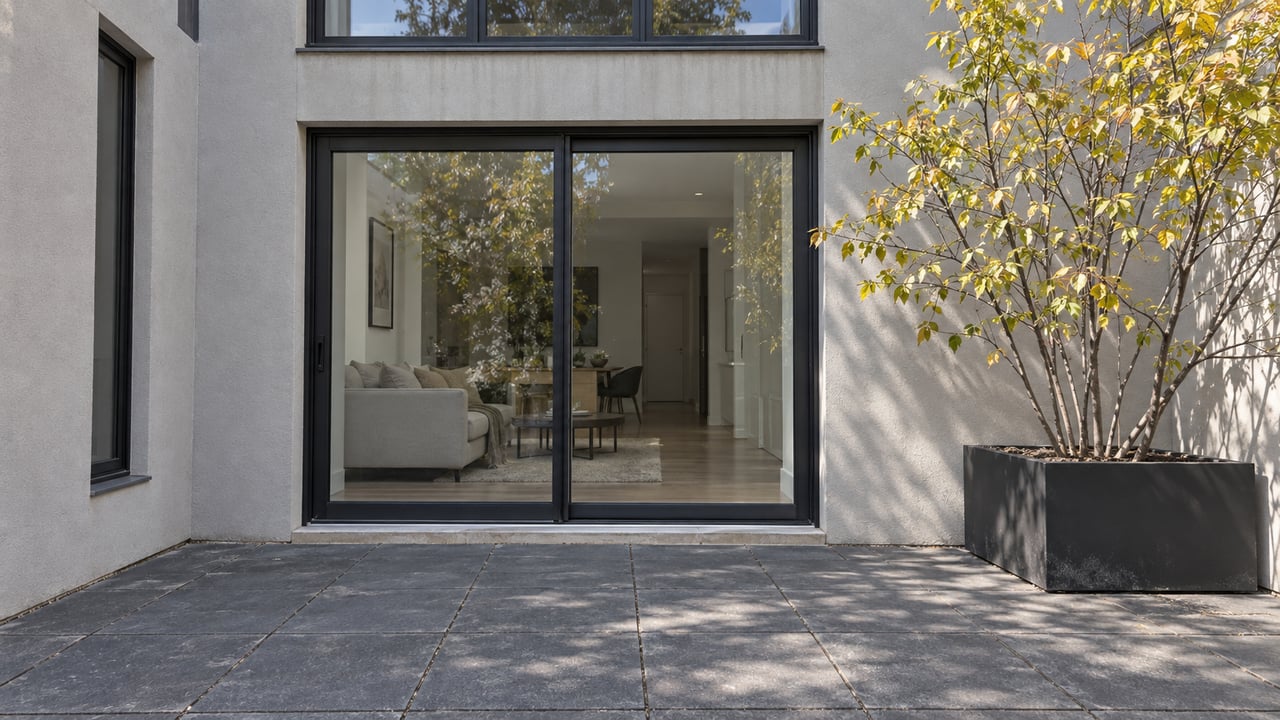
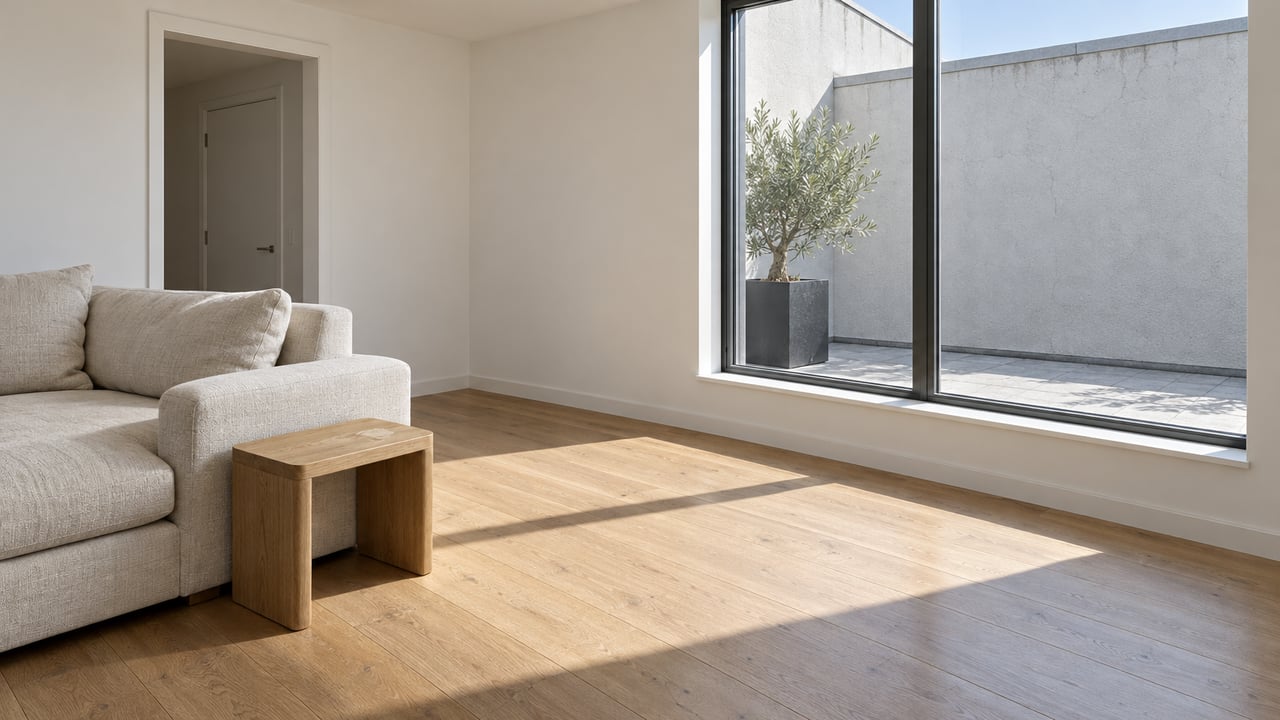
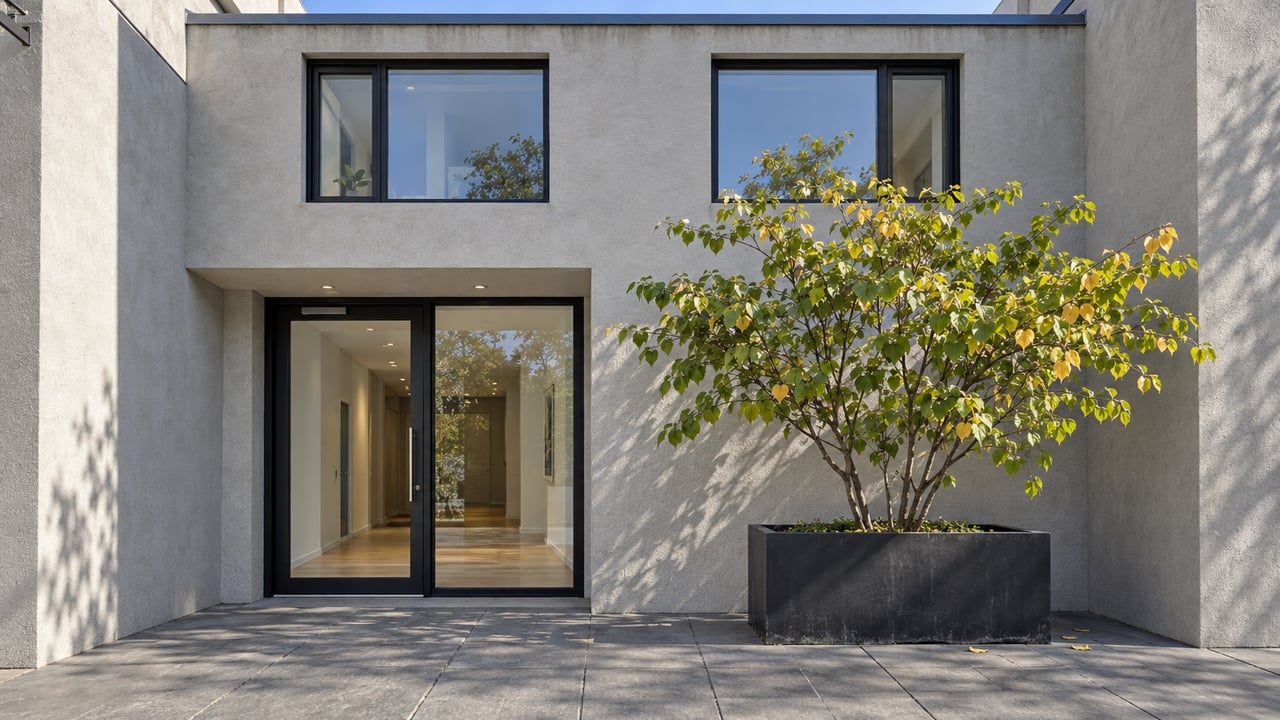
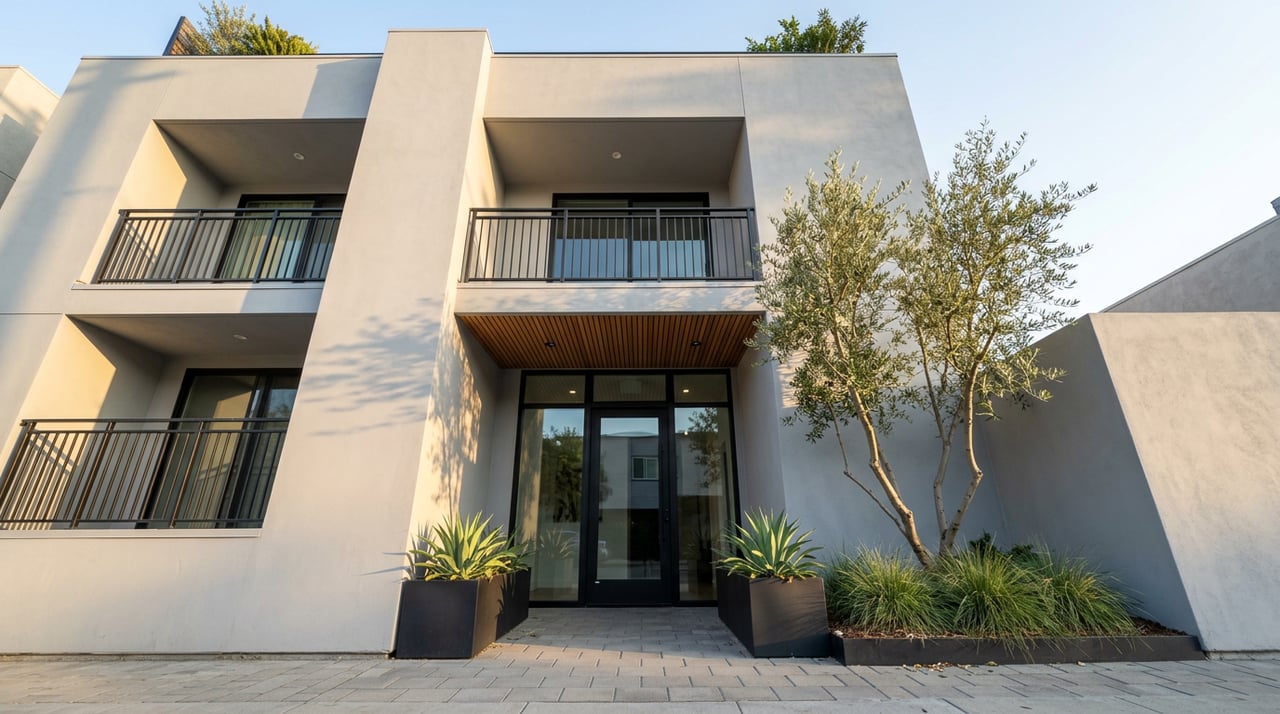
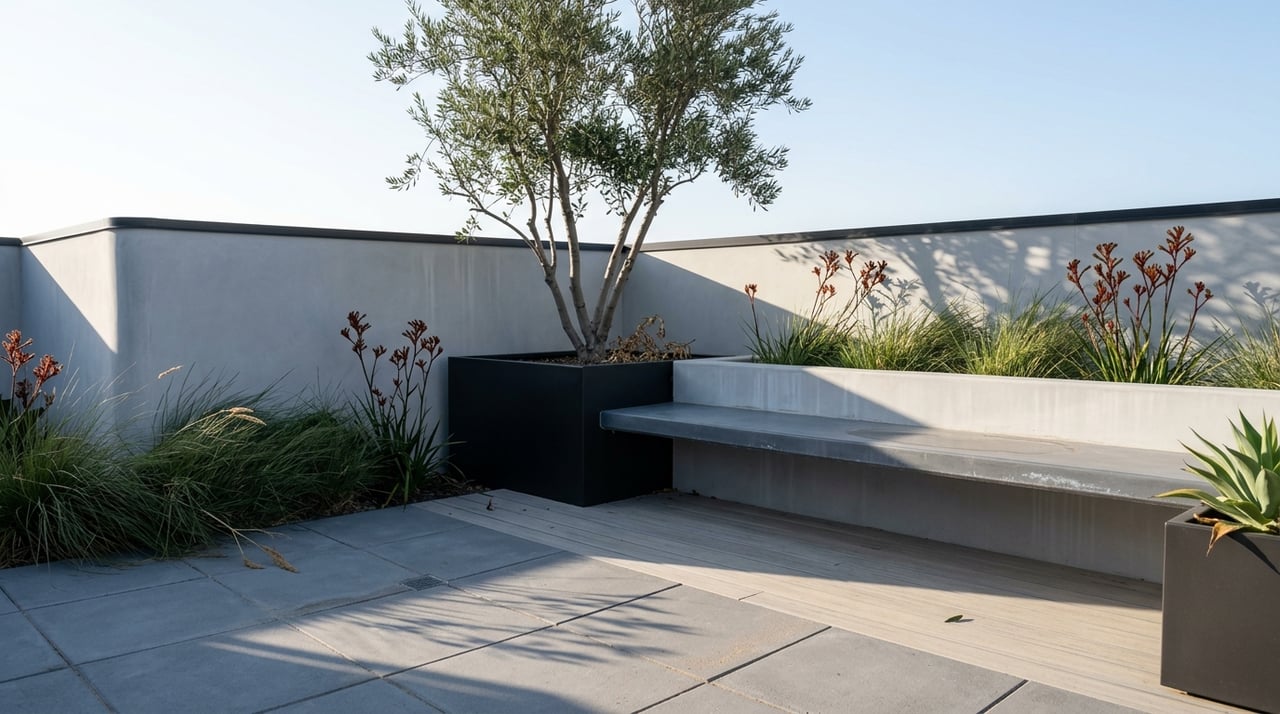
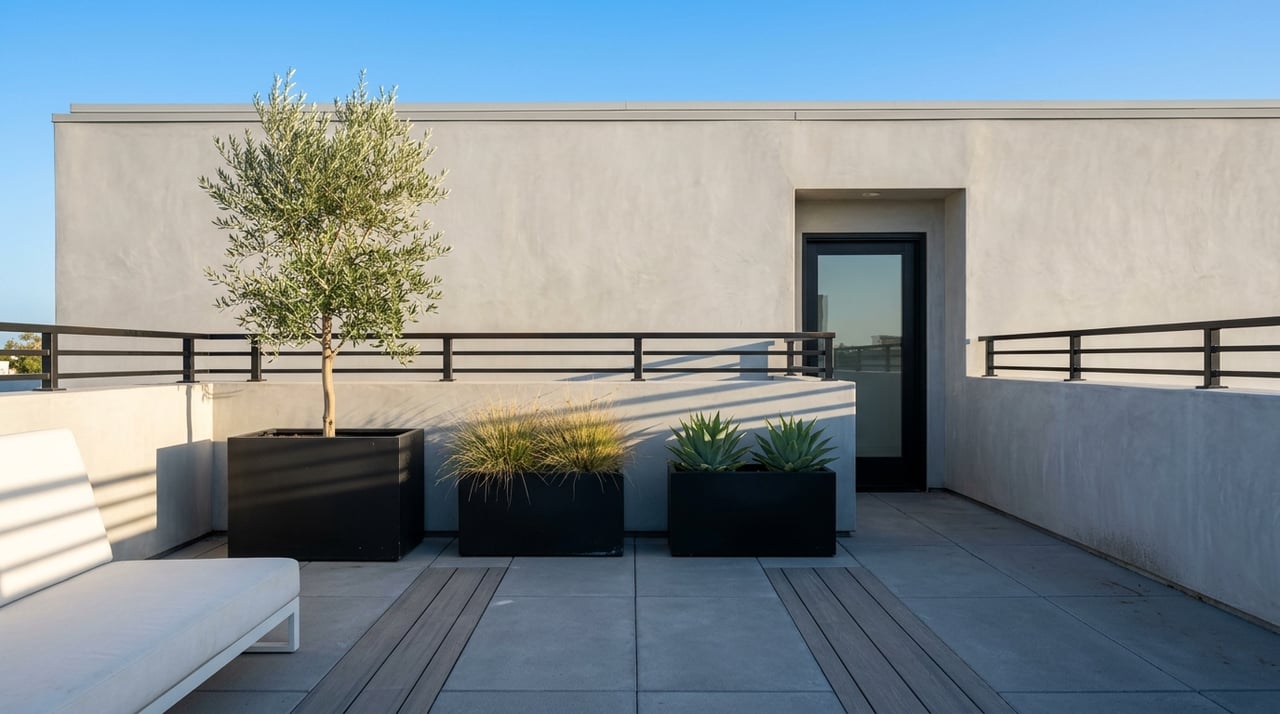
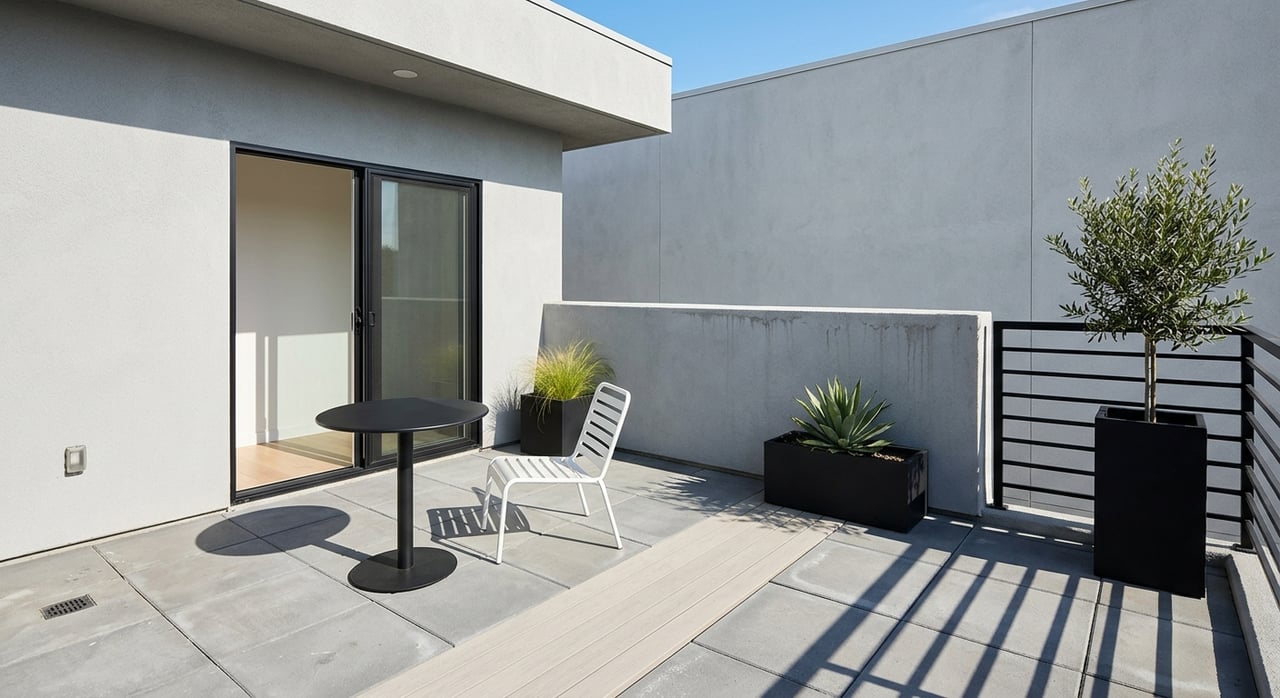
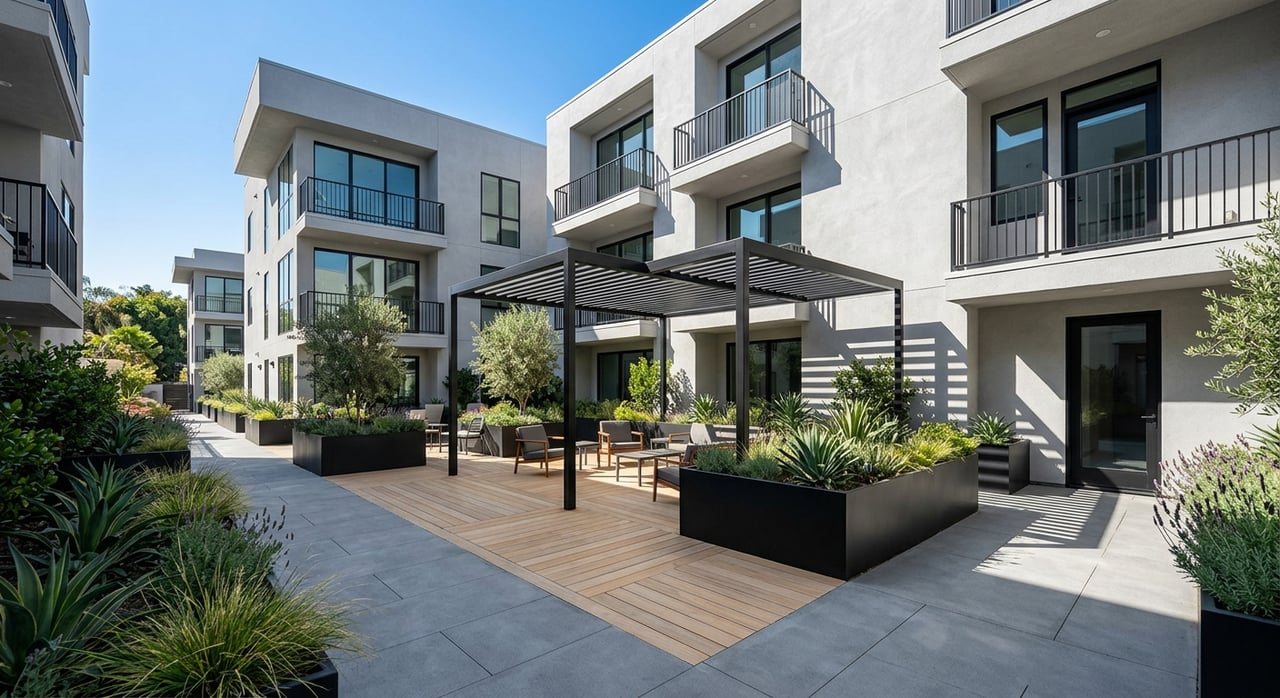
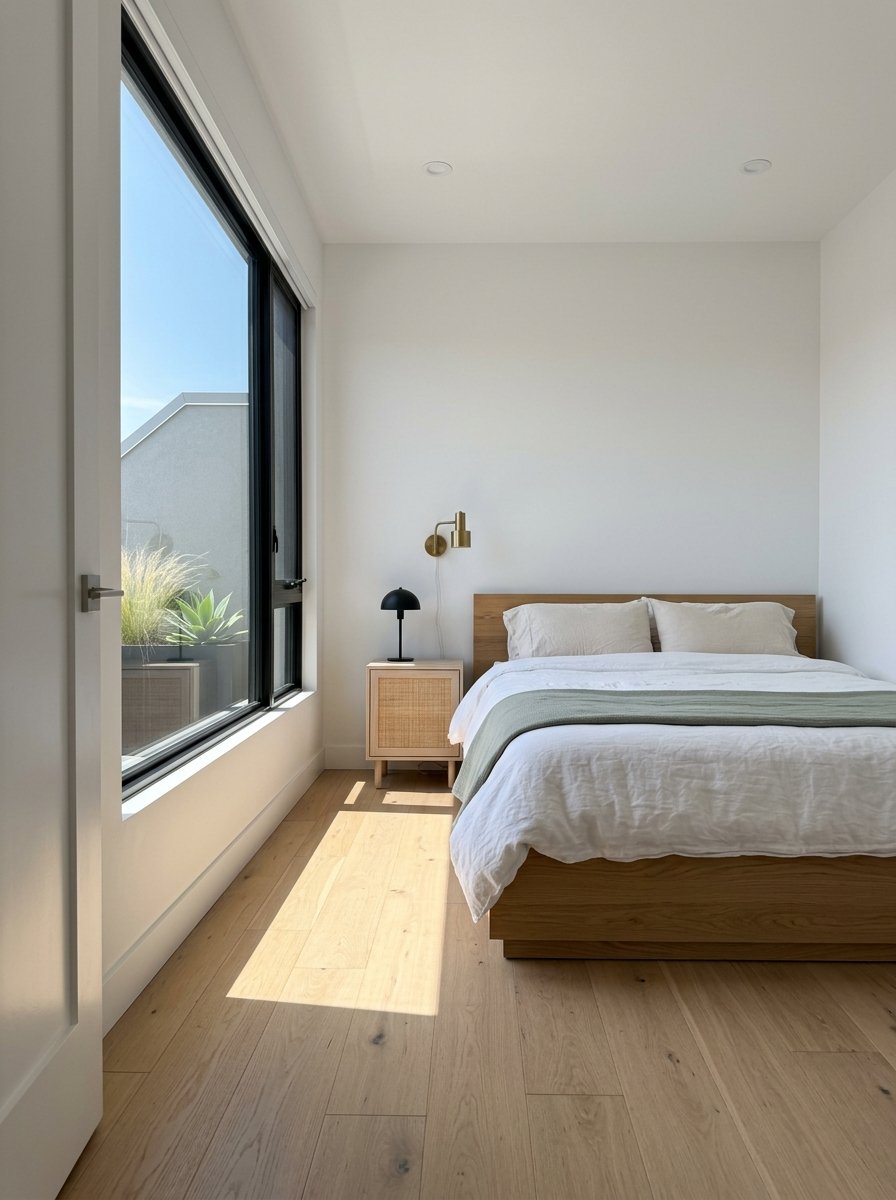
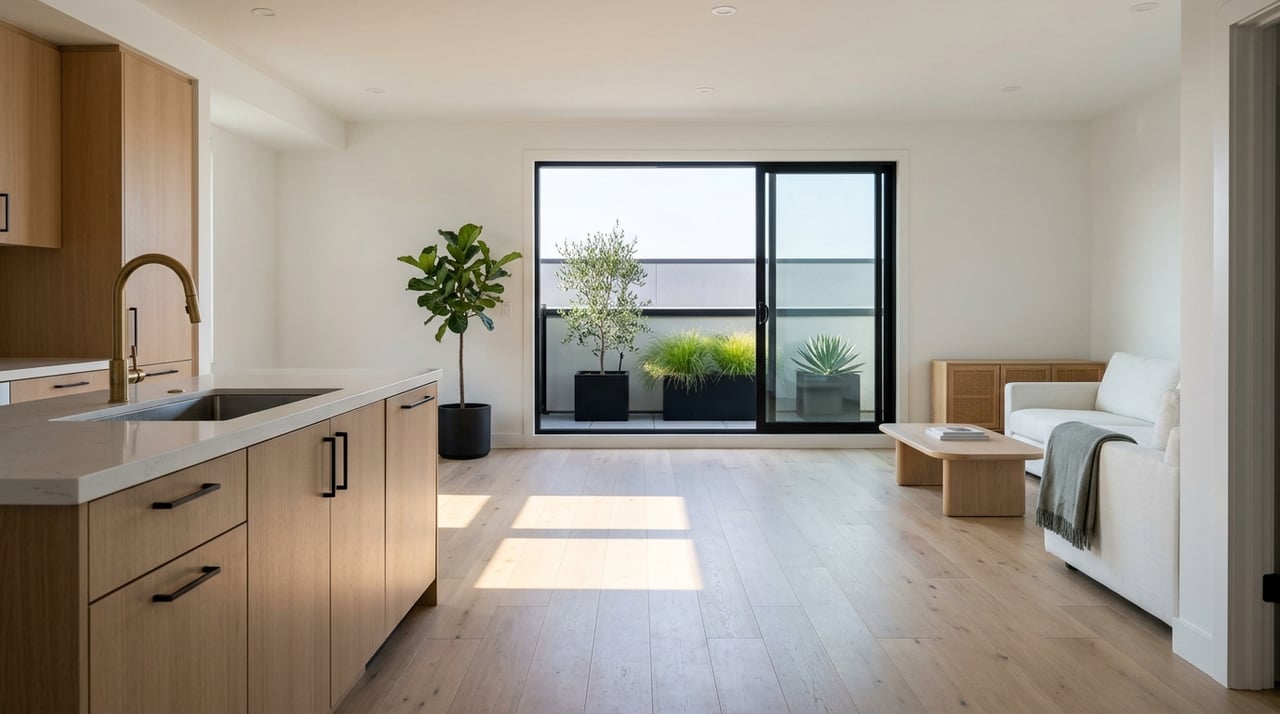
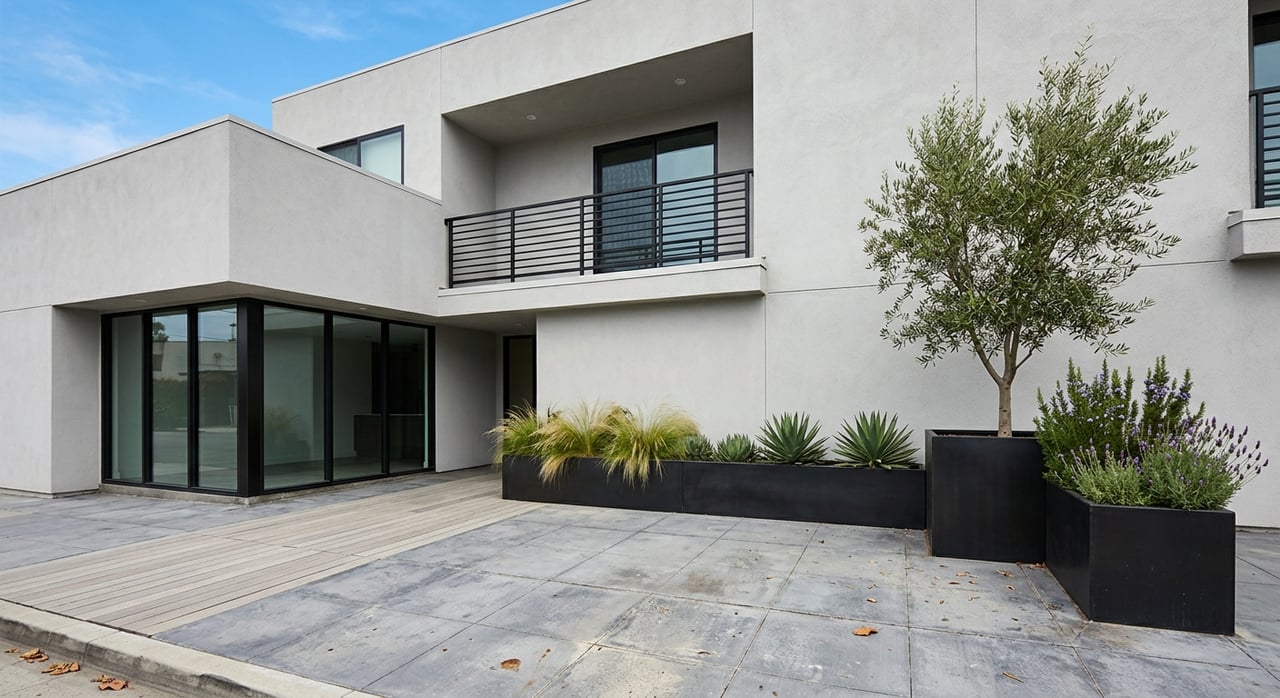
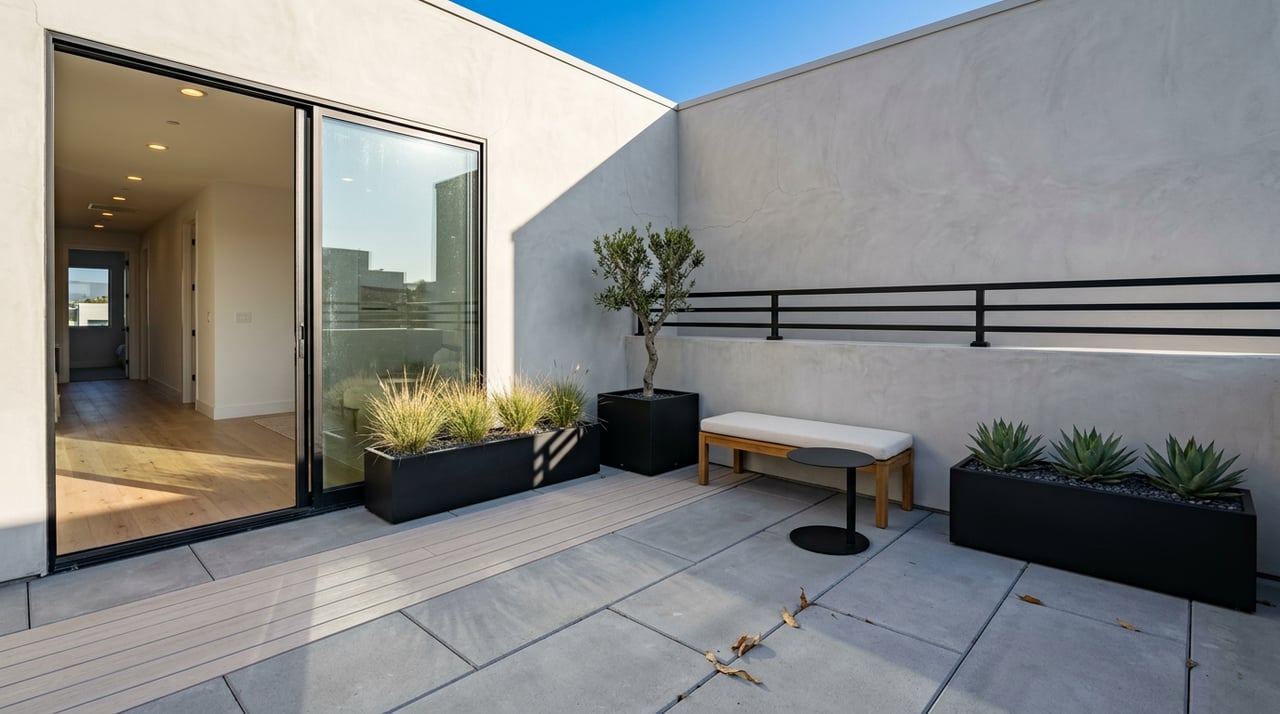
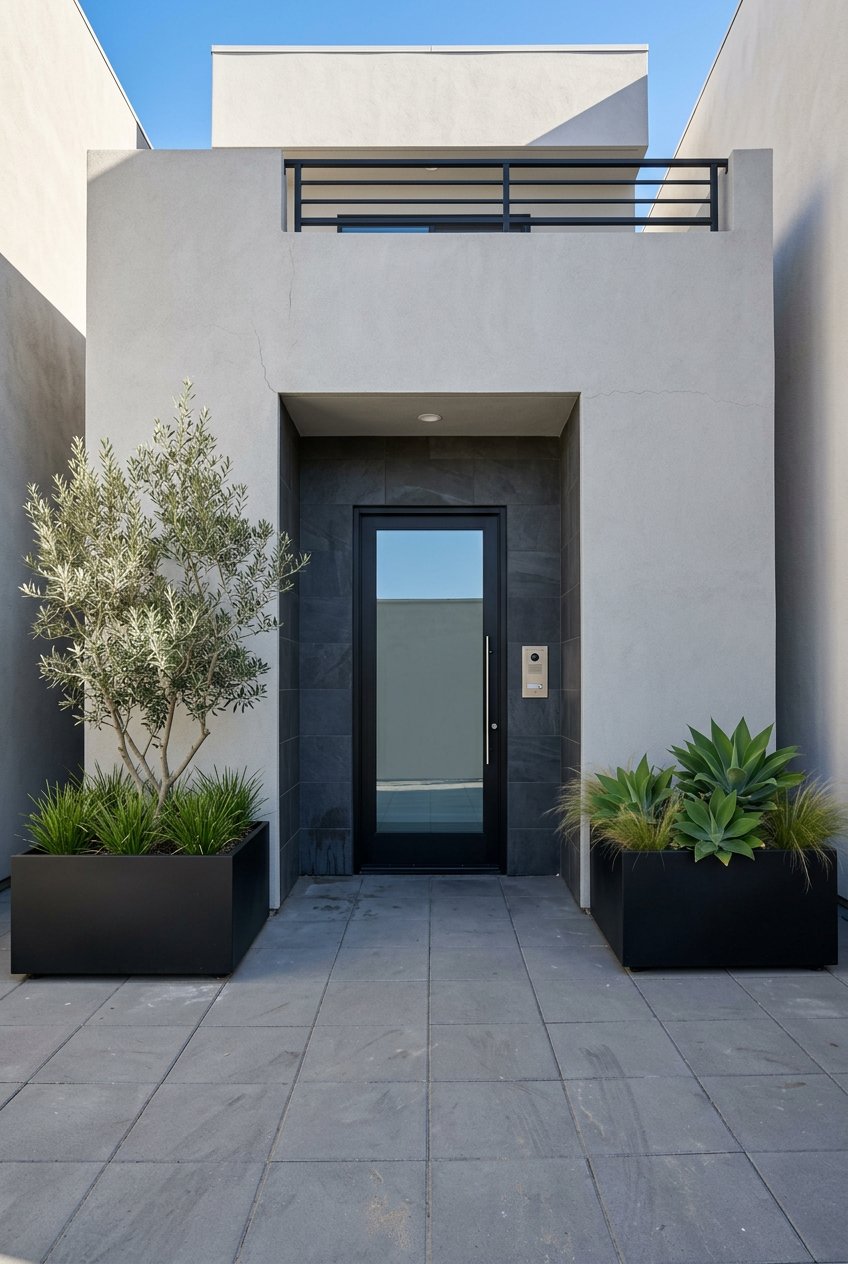
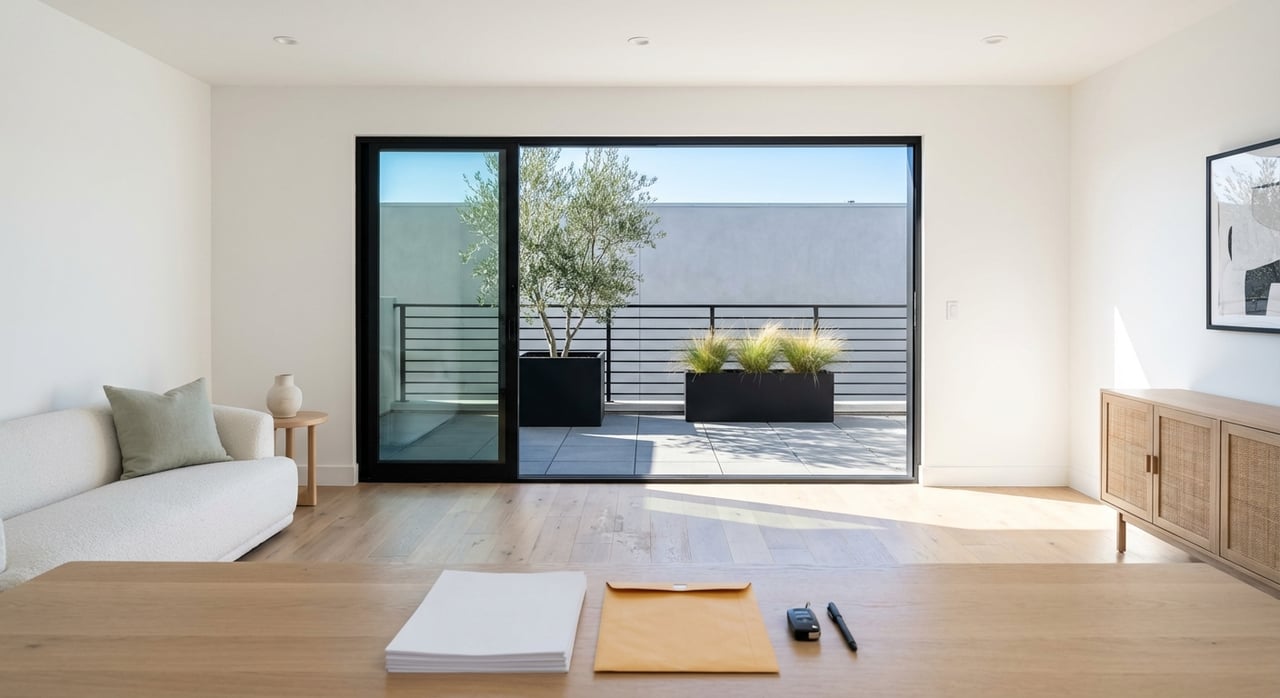
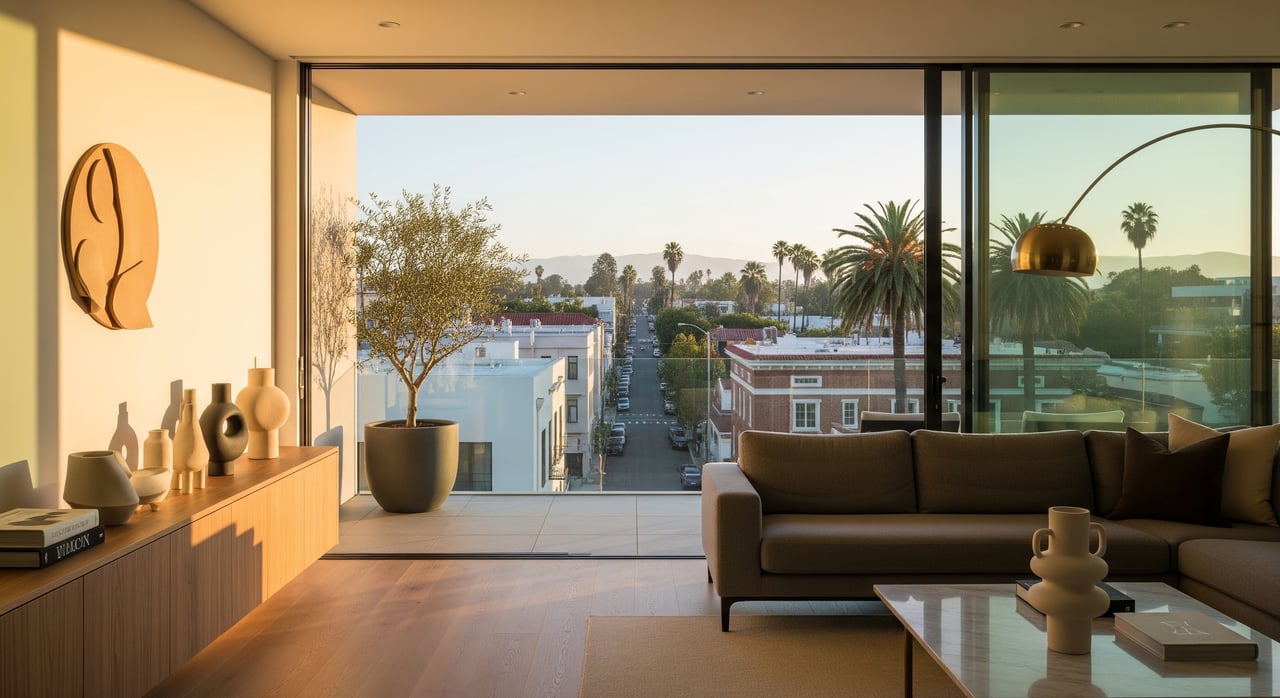
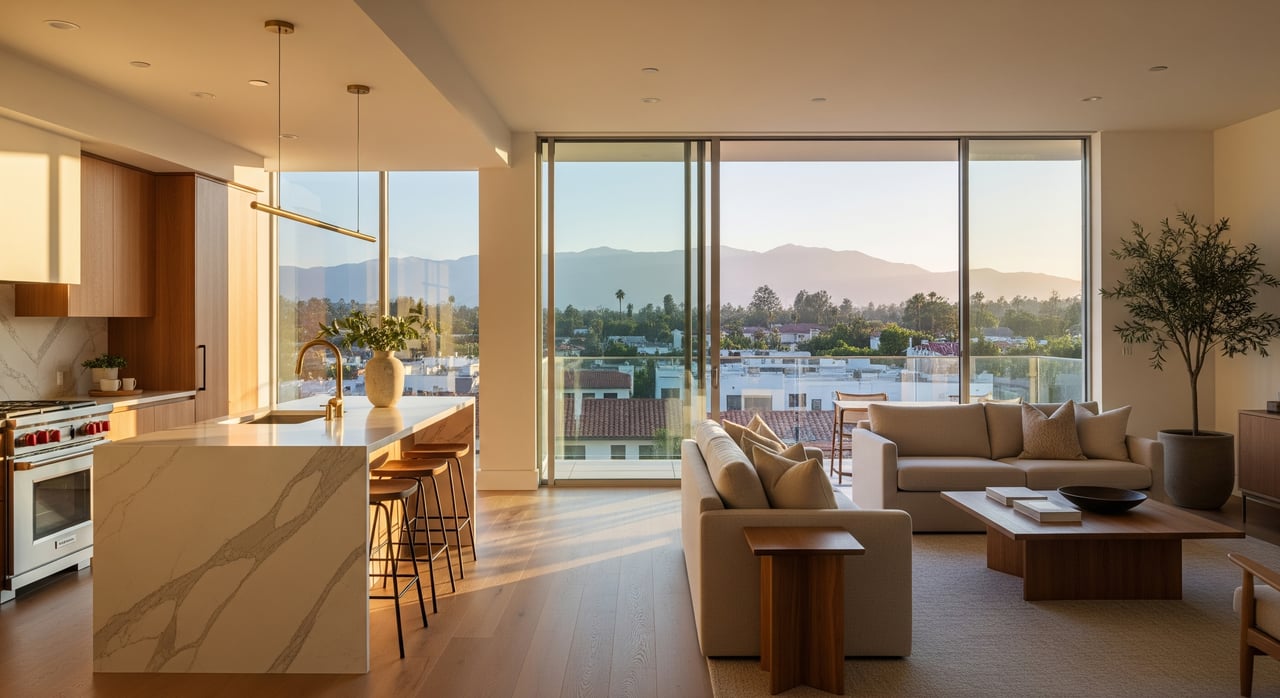
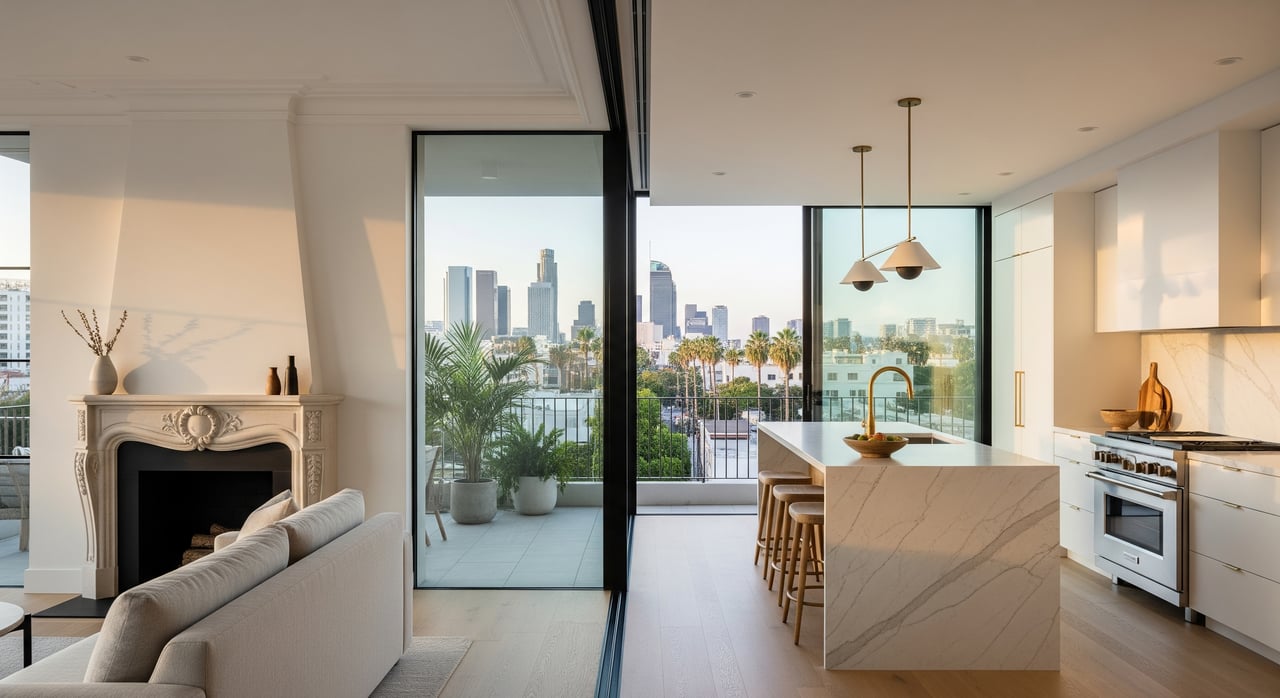
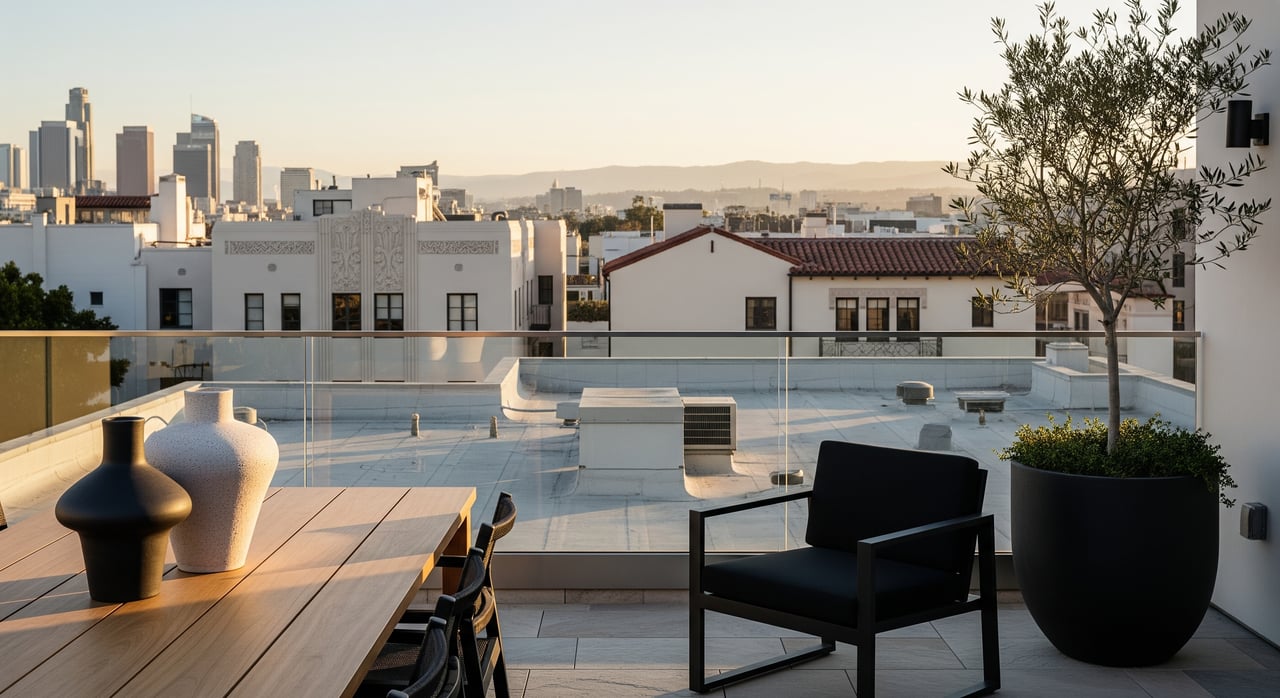
Uptown Luxury Condos is at 139 South Oak Knoll Avenue, on the street that was extended through Pasadena's first bungalow court. Its 17 homes share a rooftop the way the old courts shared a garden. If the Catalina loop brings you nearby, Shahe Seuylemezian of RE/MAX Dream Properties would be glad to show you the building. Schedule a private tour.